Five Nations in the Field Under the Rain to Monitor the Beach with Clean Swell
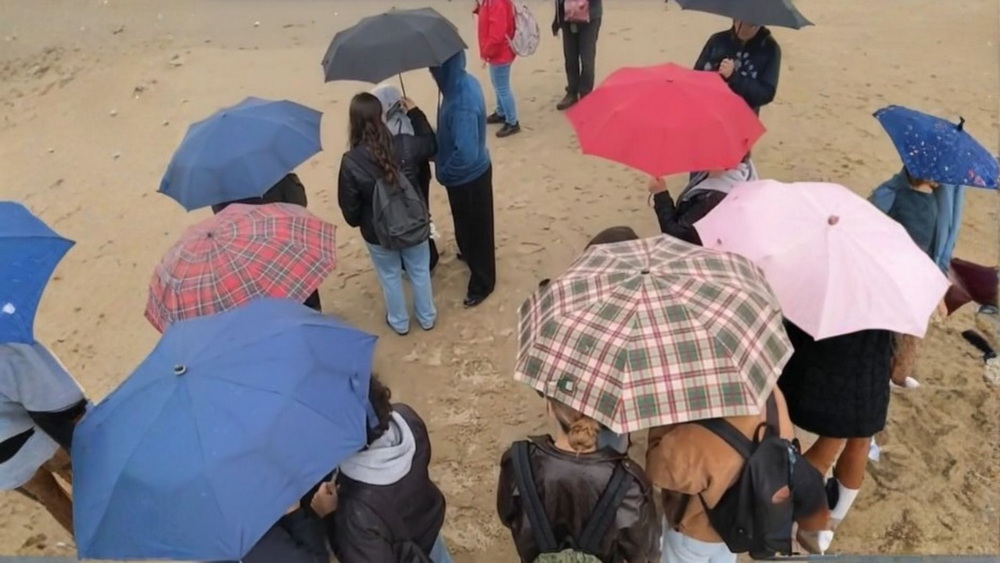
Persistent rain accompanied every minute of the beach cleanup, students from five European countries worked side by side, and a shared scientific protocol turned coastal litter not into simple waste, but into concrete data. With this energy, Fano Università del Mare APS (FUM) brought the activities of its well-established Adriatic Conservancy project to Senigallia, in collaboration with the Liceo Statale “Enrico Medi” and the European delegations hosted as part of the Erasmus+ SPRING mobility project (Shared Paths, Respect, Inclusion, Nature and Growth).
The meeting brought together students from Liceo “Medi” alongside young people from Germany (Gymnasium Tutzing in Tutzing), Norway (Kvam vidaregåande skule in Norheimsund), Poland (Liceum Ogólnokształcące Dwujęzyczne in Gdańsk), and Romania (Palatul Copiilor Bacau in Bacău). This cultural and scientific exchange already looks toward the future: the field experience gained here represents a cornerstone for building the upcoming Beach Conservancy European grant application, capitalizing on the track record FUM has already established within initiatives funded by the European Commission’s Erasmus+ programs.
From Classroom Theory to Field Monitoring
The workday began in the classroom, where participants explored the ecological value of the beach ecosystem and the methodological rules for conducting rigorous monitoring. Understanding the dynamics between sea, wind, dunes, and human activity is the first step toward observing the coastal environment with a scientific eye rather than a purely emotional one.
Immediately following the theoretical training, the group moved to the shoreline to apply Ocean Conservancy‘s Clean Swell collection and cataloging protocol. Despite steady rain throughout the entire outing, the students’ commitment never wavered: every piece of litter recovered was recorded and classified, with a special focus on searching for microplastics and cigarette butts, two of the most insidious and widespread pollutants along our coastlines.
Five Nations, One Common Protocol, and Educational Gaming with Blooket
At the end of the collection, the field data were reviewed and discussed together. Analyzing the results collectively transformed practical experience into environmental awareness, demonstrating how systematic cataloging helps identify which types of waste have the greatest impact on the environment.
The participation of students from five different nations made the initiative even more meaningful, allowing the Clean Swell protocol to be extended and introduced to diverse European school communities and territories. Alongside rigorous monitoring, the day integrated moments of education and recreation through Blooket, the browser-based platform for interactive educational quiz games where educators and organizers pair question sets with interactive mini-games and collectible character avatars, making learning dynamic and participatory.
Toward Beach Conservancy: A European Network for Our Coasts
Experiences like the one carried out with Liceo “Medi” in Senigallia confirm the value of citizen science and international cooperation in protecting seas and coastlines. Building on the methodologies already tested with Adriatic Conservancy and the solid network established through Erasmus+ projects, Fano Università del Mare continues to work toward turning youth engagement into skills, shared data, and new European initiatives such as Beach Conservancy.